
Case study · Water
Testing the limits of dry-grown viticulture in the Murray Darling
How close can vines in one of Victoria's warmest, driest regions come to being grown on rainfall alone? At Merbein, the Chalmers family is finding out.
At a glance
- Business
- Chalmers Wines
- Region
- Murray Darling, Merbein
- Type
- Grape growing, nursery and winemaking
- Project led by
- The Chalmers family and Merbein vineyard team
- Planted
- 2017, organically
- Varieties
- Inzolia and Negroamaro on Richter 110
The business
Chalmers Wines is a family-owned grape growing, nursery and winemaking business with Victorian vineyards at Merbein in the Murray Darling and at Heathcote. The Merbein property, acquired in 2010, is home to the Chalmers nursery, winery and mother-vine collection.
Alongside commercial plantings, the vineyard carries trial rows and micro-parcels of around 50 grape varieties selected for their suitability to Australian conditions, including lower water requirements and heat tolerance. The site doubles as a trial ground for the nursery collection, letting the family test varieties, rootstocks, vine density, trellising, water use and crop loads before sharing what they learn with growers.
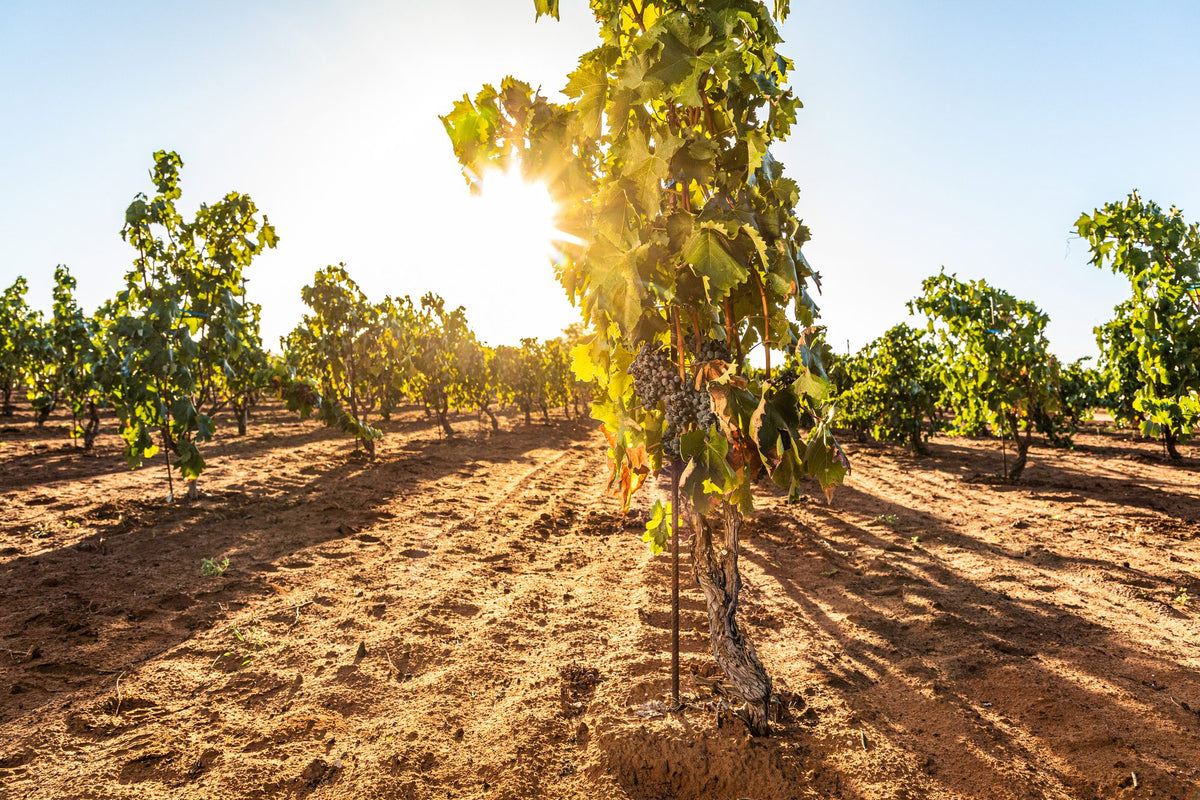
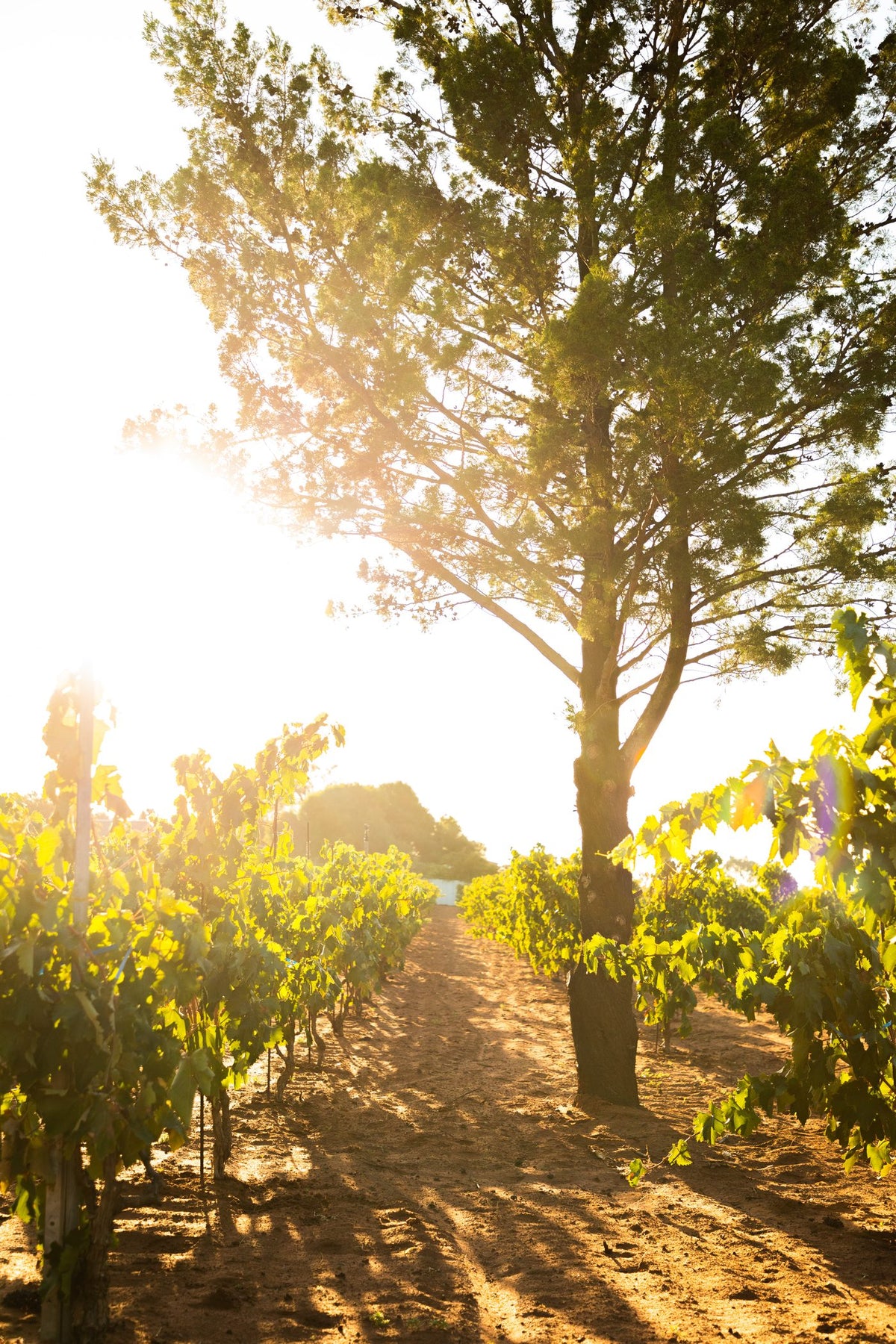
The dry-growing project centres on bush-vine blocks of Inzolia and Negroamaro established on a sandy rise at Merbein.
The opportunity
Water security is fundamental to viticulture in the warm, dry Murray Darling. Rather than treating irrigation as an unlimited input, Chalmers wanted to test how vineyard design could make better use of the water naturally available to each vine.
The approach combines varieties suited to hot, dry conditions with drought-tolerant rootstocks, wider vine spacing and a bush-vine structure designed for the site.
What they did
- Planted the block organically in 2017
Established on the site of an old orange orchard at Merbein, chosen for evidence of accessible soil moisture.
- Chose warm-climate varieties
Inzolia and Negroamaro, both drought tolerant and suited to hot, dry conditions.
- Opened up the spacing
Around 1,600 vines per hectare at 2.5m intervals, giving each vine more of the water in its own soil profile and cutting competition between neighbours.
- Grafted to drought-tolerant rootstock
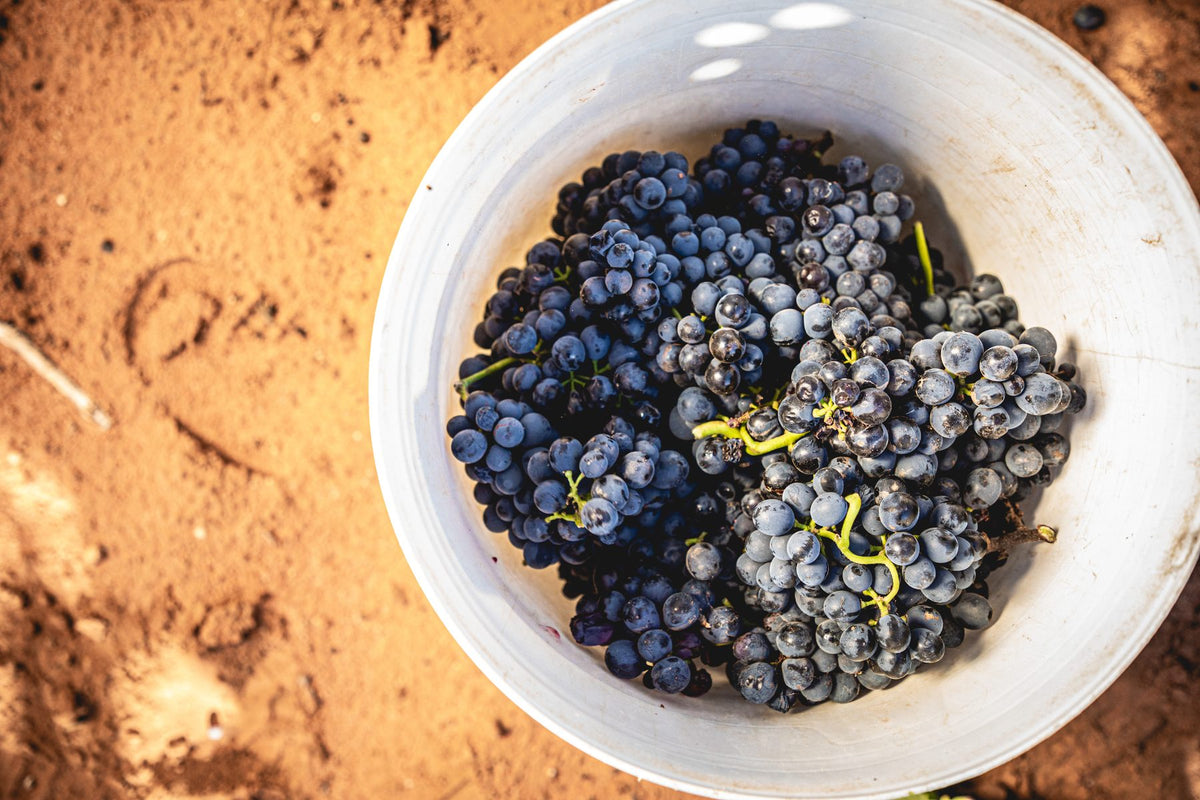
Richter 110 encourages vines to seek water deeper in the profile. Vines are trained as free-standing bush vines that shade their own fruit and canopy.
- Reduced irrigation to a supplementary role
When water is needed it is applied overhead to mimic rainfall, with the longer-term goal of excluding irrigation entirely.
Growing vines with very little irrigation in the Murray Darling is not simply about turning the water off.
Chalmers Wines, Merbein
Outcomes and observations
The project is a practical demonstration of how vineyard establishment decisions can reduce dependence on irrigation in one of Victoria's warmest and driest growing environments.
Instead of chasing irrigation efficiency after a vineyard is already in the ground, Chalmers designed the system around the water available to each vine: lower competition through wider spacing, rootstocks that seek deeper moisture, climate-suited varieties, and only minimal supplementary water when required.
It also gives the business a commercial trial platform to assess how varieties and vineyard systems perform under increasing water constraint, and to pass those learnings on through the nursery.
What they would tell another grower
Site selection, variety and rootstock choice, vine spacing and the way supplementary water is applied all have to work together. The block was deliberately established where there was evidence of accessible soil moisture, using drought and heat-tolerant varieties grafted to Richter 110, with wider 2.5m x 2.5m spacing to reduce competition.
The aim also needs to stay responsive to the season. Rather than excluding irrigation at all costs, small amounts of overhead water have been used when needed, while keeping total use well below conventional vineyard requirements.
The result
Water use well below the regional benchmark
Doing something worth sharing?
Wine Victoria is collecting practical case studies from growers and producers across the state. If you have changed the way you manage water, soil, energy or biodiversity, we would like to hear about it.
Submit your case study