
Case study · Water retention
Small scale viticulture
Tillie J wines is working what they have to rebuild microbial and biological activity in the vineyard.

At a glance
- Winery
- Tillie J
- Wine Region
- Yarra Valley
- Core business
- One acre of Pinot Noir. Winemaker with own label.
- Project led by
- Natillie Johnson, Owner & Winemaker
Summary
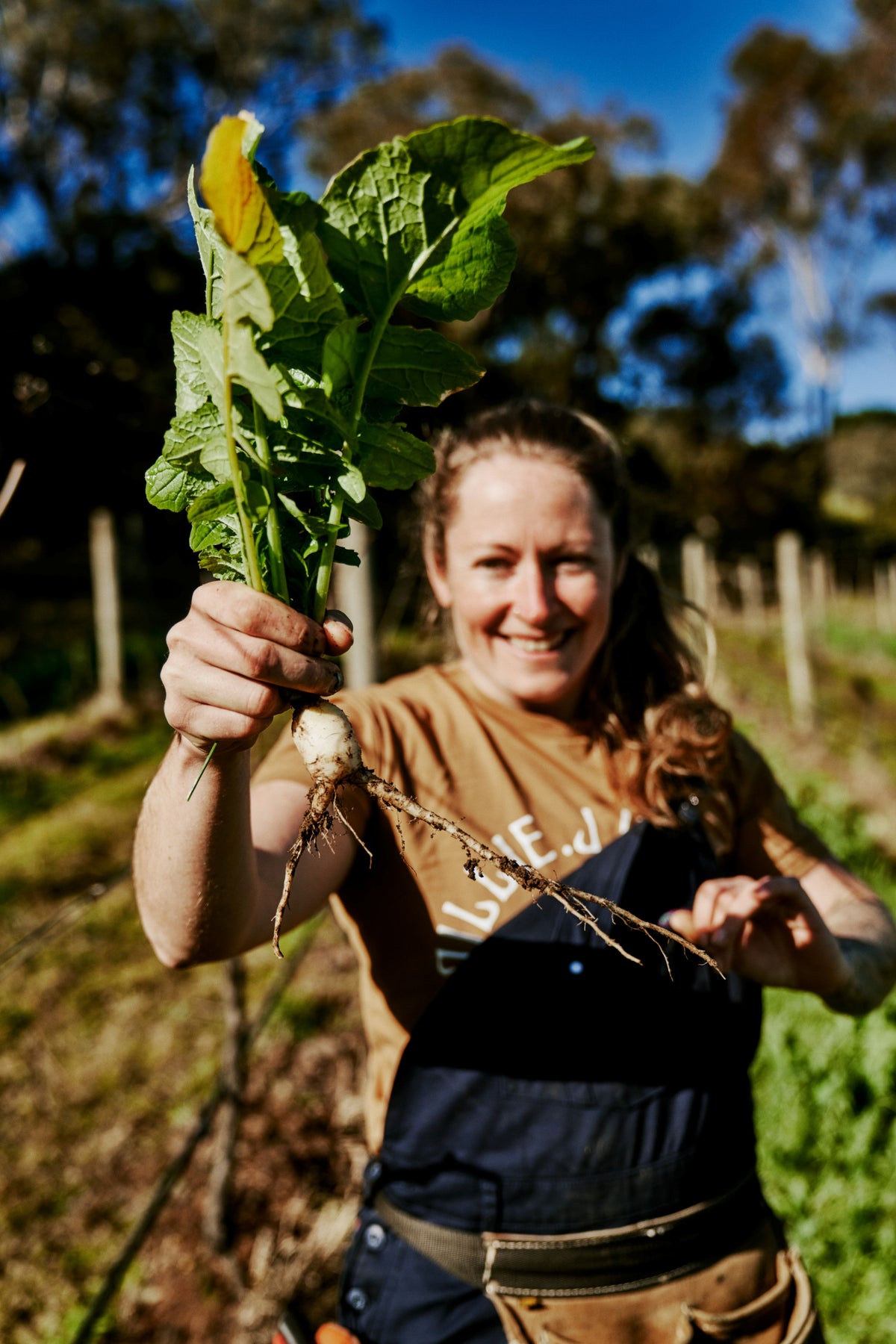
Tillie’s vineyard practice has been informed by her viticulture work in the Yarra Valley and experience with businesses including Giant Steps and TarraWarra Estate. For her own Tillie J project, she has managed a small block of Pinot Noir at Yarraloch Vineyard in Gruyere, giving her the opportunity to manage fruit from soil through to bottle.
Original problem statement
How might I work closely with the vines and trial vineyard practices myself?
One acre block
For a small grower-maker, a small block is a practical way to learn. Tillie manages about one acre of closely planted Pinot Noir on a steep, east-facing slope at Yarraloch Vineyard in Gruyere. The scale lets her follow the fruit from soil through to bottle and see how each vineyard decision affects the vines. She can trial practices herself, adjust them season by season and learn from the results, without a complete vineyard-system overhaul. Her work doesn’t depend on expensive implements or major infrastructure, so what she learns on one block can be applied by other small growers.
What they did
- Found a patch of land to care for
Took on direct management of a small Pinot Noir block, allowing vineyard decisions and their effects to be observed closely from season to season.
- Assessed site condition
Focused on rebuilding soil health and biological activity rather than relying only on inputs directed at the vine.
- Introduced beneficial microorganisms
This included mycorrhizae and Trichoderma, alongside biological fertigation to improve nutrient availability and support vine function.
- Started experimenting
Experimented with vineyard management practices to improve vineyard resilience under variable climatic conditions.
- Didn't settle with status quo
Continued exploring alternative under-vine weed management and ways to reduce reliance on non-organic sprays.
"I prepared the ground with a close mow, weighed out the seeds and sowed by hand and tickled them into the ground by dragging an old farm gate behind the tractor. Rough and ready but it worked really well!”
Natillie Johnson, Owner & Winemaker
Outcomes and observations
Tillie J is a relatively small producer who has looked after a number of leased vineyards without investing in expensive implements. She has learnt that cover cropping is an easy to sew and maintain approach with very little equipment, an open mind and the use of stuff you have around you. Tillie takes a hands on approach to preparing the ground with a close mow, weighs out the seeds and sews them by hand, tickling them into the ground with whatever is available - as simple as dragging an old farm gate behind the tractor! Lots of things work and can do the job at a low cost.
The result
Enhanced knowledge of what works with minimal investment.
Key learning
It seems obvious now but when growing an under vine sward. It’s important to keep in mind that you’re watering an extra system (vine and sward) when irrigating. Tillie saw a hot start to the year in 2025, so she applied a huge amount of water to the vineyard during this time. The vines still struggled and despite being confident with her irrigation infrastructure she believes the demand for water on the under vine growth may have taken away from what the vines received.
New opportunity
Tillie has shown that cover cropping can be done cheaply and easily on a small block. The next opportunity is to work out how to keep an under-vine sward without it competing with the vines for water, so that groundcover supports water retention instead of adding to demand in hot seasons.

Research
- Soil Health: A literature review was commissioned to develop an understanding of soil health research relating to soil biology and viticulture.
- Improve your soil, the rest will follow: Richard Leask traversed the globe last year exploring regenerative agriculture systems and has returned with a clear and simple message for the wine sector: improve your soil and the rest will follow.
- Soil and Grapevine nutrition: Research on vineyard soil health, soil analysis, salinity, management practices to improve soil structure and grapevine nutrition.
Doing something worth sharing?
Wine Victoria is collecting practical case studies from growers and producers across the state. If you have changed the way you manage water, soil, energy or biodiversity, we would like to hear about it.
Submit your case study