
Case study · Water Saving
Bush vines
Chalmers winery is experimenting with vineyard management in a warm and dry climate.
At a glance
- Winery
- Chalmers
- Wine Region
- Murray Valley
- Core business
- Italian varietals. Grapegrowers and winemakers with own label. As well as long established wholesale vine nursery.
- Project led by
- Bart van Olphen, Chief Winemaker
Summary
Chalmers operates across two hot, dry and drought-prone regions. At its Merbein vineyard, a trial planted in 2017 asked a simple and ambitious question: how might we grow quality grapes on as little water as possible, ideally rainfall alone? The bush vine block combines heat-tolerant Italian varieties, Negroamaro and Inzolia, with low-intervention management and a minimal top-up from overhead sprinklers that mimic rainfall. In its first seasons the block ran on roughly 300-400mm of combined rainfall and irrigation per year, well below what is normally considered necessary for productive vines. The trial also showed the trade-offs: the vines still need careful pruning, canopy management and restricted yields, and the system is labour intensive.
Original problem statement
How might we grow quality grapes on as little water as possible, ideally rainfall alone?
Bush Vines
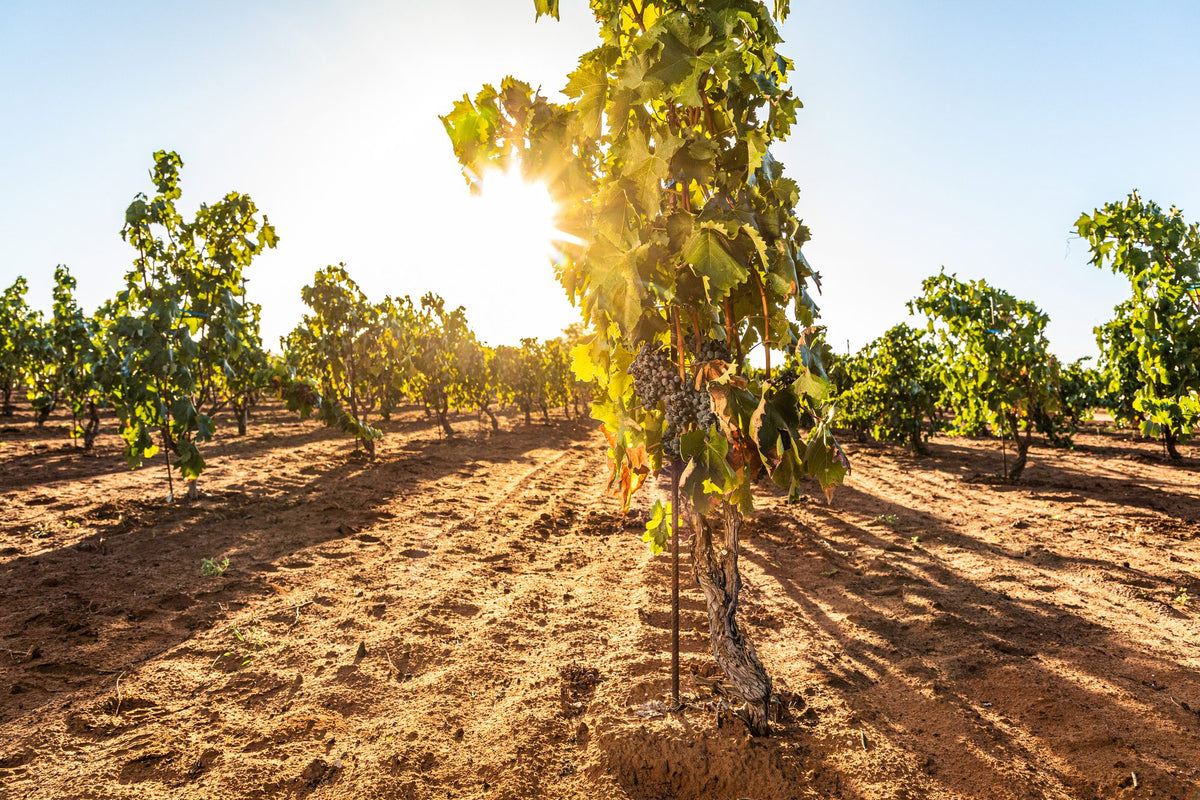
Grown as free-standing, low-profile vines without trellising, they develop a compact, self-shading canopy that protects fruit from intense sun exposure and reduces the heat load on the vine.
- Their lower leaf area and deeper, more established root systems can mean reduced water demand, which suits regions where irrigation is limited or unreliable.
- Bush vines represent an opportunity to produce quality fruit with fewer inputs, lower infrastructure costs and greater resilience to drought and heat extremes.
They also align well with varieties and styles that benefit from low yields and concentrated flavour, giving Chalmers a point of difference in a warming climate.

What they did
- Chose an patch of land to convert
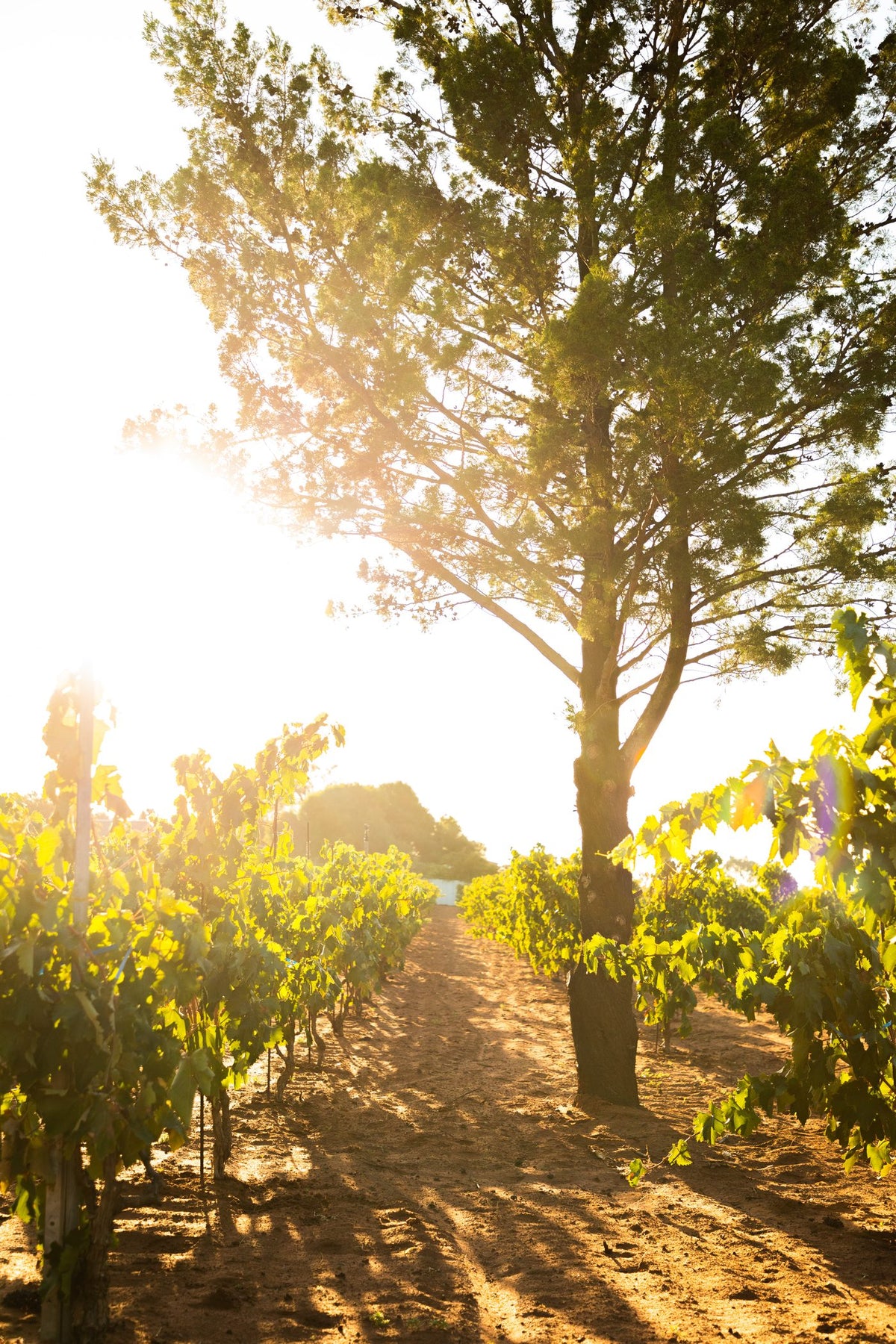
In 2017 Chalmers planted the bush vines on the site of an old orange orchard at their Merbein site. They chose it because it had underlying evidence of having accessible soil moisture.
- Selected warm-climate grape varieties
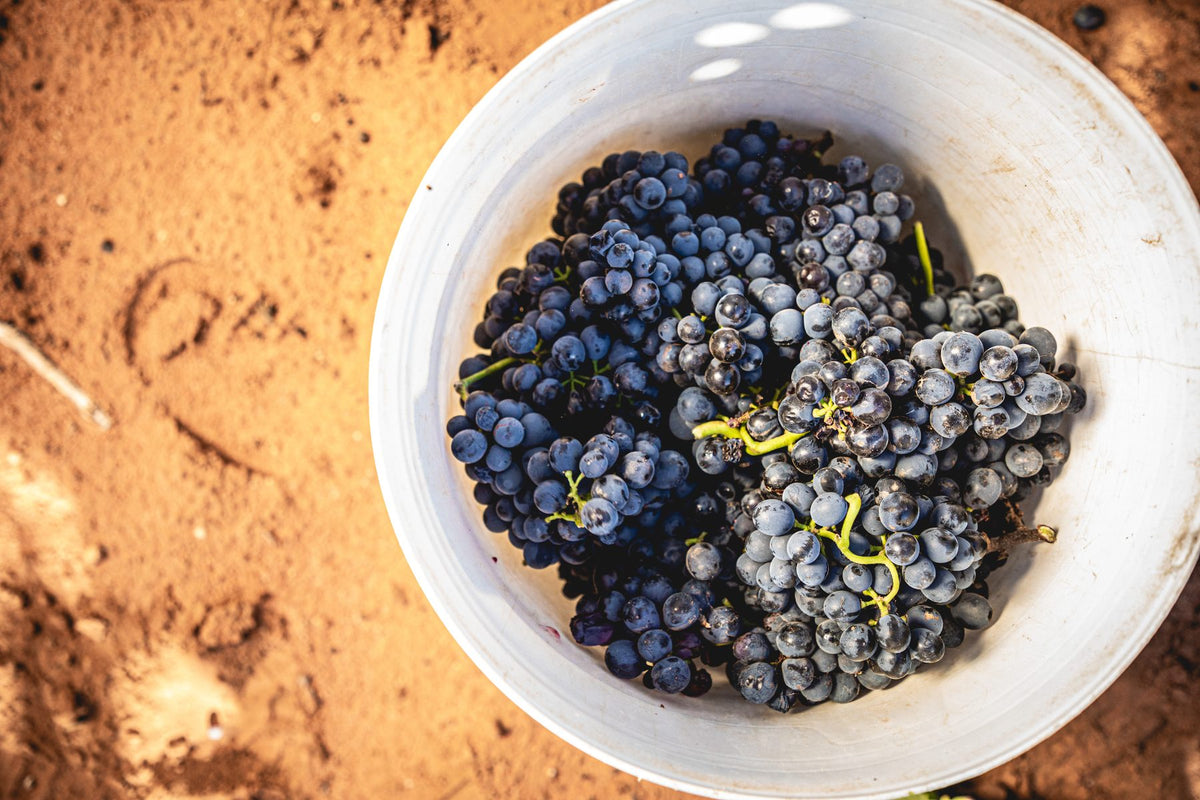
Given they weren't intending to water the vines, they chose two varieties (Inzolia and Negroamaro) which were proven as drought tollerant and suited to hot, dry conditions.
- Opened up the vine spacing
They planted 1,600 vines per hectare and spaced them at around 2.5m intervals to give each vine greater access to the water avilable in its immediate soil profile and to reduce competition between neighbours.
- Grafted to drought-tolerant rootstock
Used drought-tolerant rootstocks (Richter 110) to encourage vines to seek water deeper in the soil profile, while training vines as free-standing bush vines that provide their own fruit and canopy shade.
- Reduced irrigation to a supplementary role
When required, water is applied overhead to mimic rainfall, with the longer-term goal of excluding irrigation entirely.
"The idea was to grow Bush vines - it's really interesting to me to challenge the assumed minimum rainfall in the literature. In the literature the water need is high, we think its cool that we can grow vines with less."
Bart Van Olphen, Chief Winemaker
Outcomes and observations
The project is a practical demonstration of how vineyard establishment decisions can reduce dependence on irrigation in one of Victoria's warmest and driest growing environments.
Instead of chasing irrigation efficiency after a vineyard is already in the ground, Chalmers designed the system around the water available to each vine: lower competition through wider spacing, rootstocks that seek deeper moisture, climate-suited varieties, and only minimal supplementary water when required.
It also gives the business a commercial trial platform to assess how varieties and vineyard systems perform under increasing water constraint, and to pass those learnings on through the vine nursery.
The result
Water use well below the regional benchmark
Key learning
Growing vines with very little irrigation in the Murray Valley region is not simply about turning the water off. Think carefully about site selection, grape variety, rootstock choice and vine spacing.
The experience so far has taught us that the aim is to remain responsive to seasonal conditions - so rather than excluding irrigation at all costs, it is about being responsive.
Apply water when needed using overhead sprays to keep total water use well below conventional vineyard requirements in the region.
New opportunity
The trial shows that quality fruit is possible on very little water, but it still relies on a small irrigation top-up and significant labour. The challenge now is to understand how far this approach can be pushed towards rainfall alone, and whether it can be made viable beyond a trial block without compromising fruit quality or cost.
Research
- Climate Atlas: A three-year project with the University of Tasmania brought together an extensive, multi-disciplinary research team to consider the impact of seasonal climate variability and longer-term climate trends on the wine sector in Australia. The atlas helps to answer the question – what will my region’s climate look like in the future?
- Varietal choice for a warmer future: The authors surveyed grape and wine producers across a range of regions to find out which alternative varieties they are considering for future plantings, asking them specifically if heat tolerance is one of the main reasons for considering those varieties. Drawing on that feedback the authors outline the varietal suggestions that those producers have identified as being worthy of consideration under climate change conditions.
- Climate adaptation - developing irrigation strategies to combat dry winters: Reduced winter rainfall is expected as a consequence of climate change. Low rainfall during winter, resulting in a soil profile that is not full by spring, has been shown to reduce grapevine canopy growth and yield. Building on previous work, irrigation strategies were evaluated that modified the pattern and timing of supplementary soil wetting in winter.
Doing something worth sharing?
Wine Victoria is collecting practical case studies from growers and producers across the state. If you have changed the way you manage water, soil, energy or biodiversity, we would like to hear about it.
Submit your case study